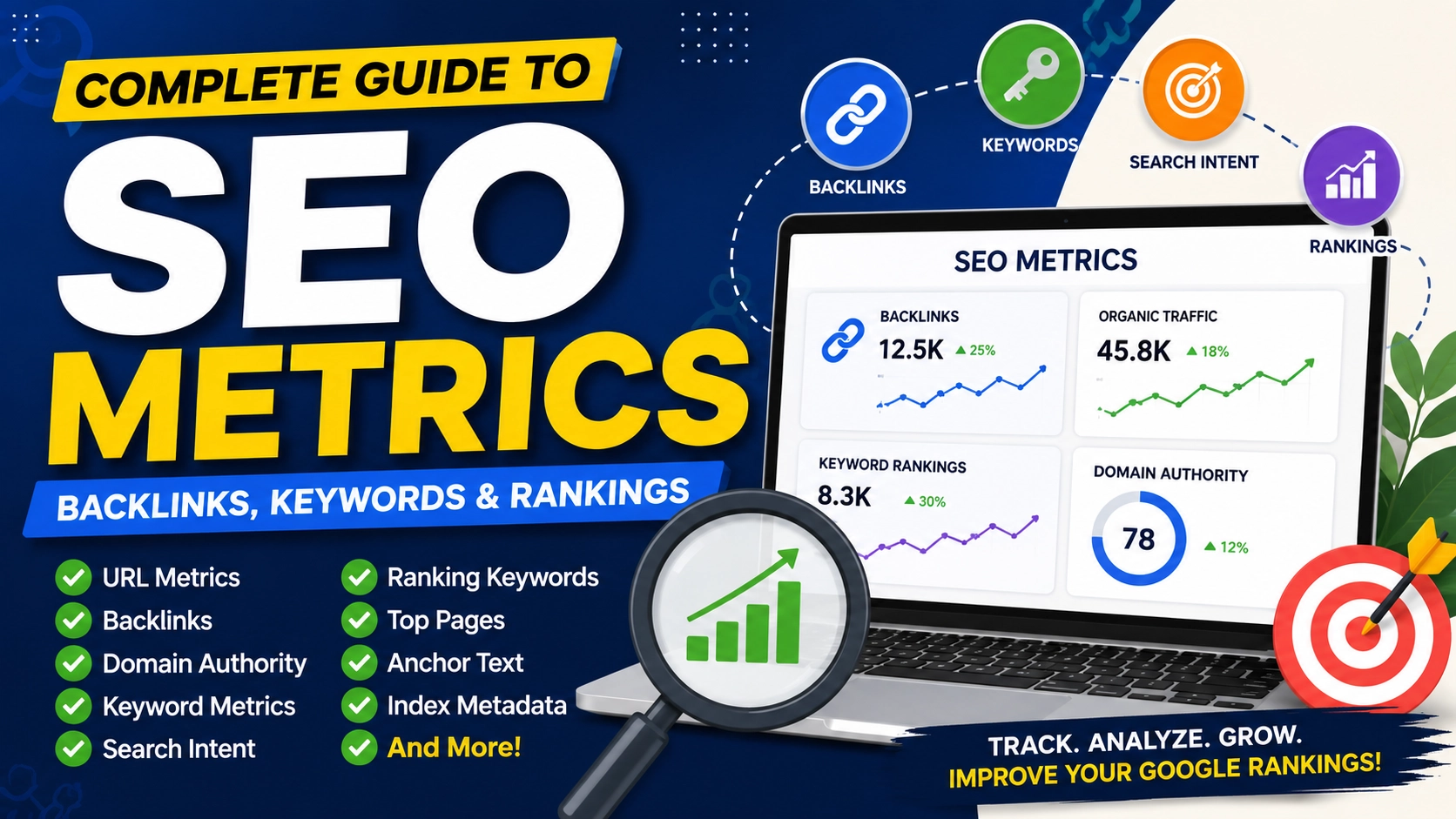
Search Engine Optimization (SEO) is very important for every website. Whether you run a blog, ecommerce store, company website, or online business, SEO helps you get more traffic from Google and other search engines.
But to improve SEO, you must understand SEO metrics. These metrics help you measure website performance, keyword rankings, backlinks, authority, and user behavior.
In this guide, we will explain the most important SEO metrics in simple and easy English.
What Are SEO Metrics?
SEO metrics are data points that help you understand how well your website performs in search engines.
These metrics show:
-
Website authority
-
Keyword rankings
-
Backlink quality
-
Search traffic
-
User intent
-
Technical SEO performance
By tracking SEO metrics regularly, you can improve your rankings and grow your organic traffic.
1. URL Metrics
URL metrics show the strength and quality of a webpage.
These metrics usually include:
-
Page authority
-
Spam score
-
Trust score
-
Organic traffic
-
Link strength
Strong URL metrics help pages rank higher in Google search results.
Why URL Metrics Matter
-
Improve page ranking
-
Measure SEO strength
-
Compare competitor pages
-
Identify weak pages
2. Links (Backlinks)
Backlinks are links from other websites pointing to your website.
Google considers backlinks as a trust signal. Websites with quality backlinks usually rank better.
Types of Backlinks
-
Do-follow links
-
No-follow links
-
Internal links
-
External links
Benefits of Backlinks
-
Increase domain authority
-
Improve rankings
-
Bring referral traffic
-
Build trust
Focus on getting high-quality backlinks instead of spammy links.
3. Brand AuthorityBrand authority means how trusted and popular your brand is online.
When people search your brand name directly on Google, it improves brand authority.
Ways to Increase Brand Authority
-
Publish quality content
-
Get mentions from trusted websites
-
Stay active on social media
-
Collect positive reviews
A strong brand builds trust with both users and search engines.
4. Link Intersect
Link intersect helps you find websites linking to your competitors but not linking to you.
This is useful for backlink outreach and link-building strategies.
Benefits of Link Intersect
-
Discover backlink opportunities
-
Find competitor backlinks
-
Improve link-building campaigns
Many SEO tools provide a link intersect feature.
5. Linking Root Domains
Linking root domains are the number of unique websites linking to your site.
For example:
-
100 links from 1 website = 1 root domain
-
100 links from 100 websites = 100 root domains
Google values unique linking domains more than multiple links from the same website.
Why It Matters
-
Increases website authority
-
Improves trust signals
-
Helps rankings grow faster
6. Link Status
Link status shows whether backlinks are active, broken, redirected, or lost.
Monitoring link status is important because lost links can reduce rankings.
Common Link Status Types
-
Active links
-
Broken links
-
Redirected links
-
Lost links
Regular SEO audits help maintain healthy backlinks.
7. Anchor Text
Anchor text is the clickable text used in a hyperlink.
Example:
“Best SEO tools” linking to an SEO tools page.
Best Practices for Anchor Text
-
Use natural keywords
-
Avoid keyword stuffing
-
Keep anchor text relevant
-
Use branded anchors
Good anchor text improves SEO and user experience.
8. Final Redirect
Redirects send users from one URL to another URL.
A final redirect shows the destination page after all redirects.
Common Redirect Types
-
301 Redirect (Permanent)
-
302 Redirect (Temporary)
Why Redirects Matter
-
Prevent broken pages
-
Maintain SEO value
-
Improve user experience
Too many redirects can slow down websites.
9. Top Pages
Top pages are the best-performing pages on your website.
These pages usually get:
-
High traffic
-
More backlinks
-
Better rankings
-
Higher engagement
Analyzing top pages helps you understand what content works best.
10. Global Top Pages
Global top pages show the most popular pages across the internet or competitors’ websites.
This data helps you:
-
Find trending content
-
Analyze competitors
-
Create better articles
11. Global Top Root Domains
This metric shows the most powerful domains based on backlinks and authority.
Examples include:
-
Google
-
YouTube
-
Wikipedia
Learning from high-authority domains can improve your SEO strategy.
12. Index Metadata
Index metadata includes SEO information stored by search engines.
Examples:
-
Meta title
-
Meta description
-
Canonical tags
-
Robots tags
Proper metadata improves click-through rate and indexing.
13. Usage Data
Usage data shows how visitors interact with your website.
Important metrics include:
-
Bounce rate
-
Session duration
-
Pages per visit
-
Click behavior
Good user engagement improves SEO performance.
14. Keyword Metrics
Keyword metrics help measure keyword performance.
Common keyword metrics:
-
Search volume
-
Keyword difficulty
-
CPC (Cost Per Click)
-
Competition level
Choosing the right keywords is important for SEO success.
15. Keyword Suggestions
Keyword suggestion tools help you find related keywords users search on Google.
Benefits
-
Find long-tail keywords
-
Discover low-competition keywords
-
Generate blog ideas
Using keyword suggestions can increase organic traffic.
16. Search Intent
Search intent means the reason behind a user's search query.
Main Types of Search Intent
-
Informational
-
Navigational
-
Transactional
-
Commercial
Understanding search intent helps create better content that matches user needs.
17. Ranking Keywords
Ranking keywords are the search terms where your website appears in Google results.
Tracking keyword rankings helps measure SEO progress.
Why Ranking Keywords Matter
-
Measure traffic growth
-
Track SEO success
-
Find content opportunities
Best SEO Tools for Tracking Metrics
Here are some popular SEO tools:
-
Ahrefs
-
SEMrush
-
Moz
-
Google Search Console
-
Ubersuggest
-
Screaming Frog
These tools help track backlinks, rankings, keywords, and technical SEO.
Final Thoughts
SEO metrics are very important for improving website performance and Google rankings. By understanding backlinks, keyword metrics, search intent, URL metrics, and authority signals, you can build a strong SEO strategy.
Focus on:
-
Creating quality content
-
Building backlinks
-
Optimizing keywords
-
Improving user experience
-
Tracking SEO performance regularly
SEO is a long-term process, but with the right metrics and strategy, your website can achieve better rankings and more organic traffic.
0 Comments
Leave a Comment