

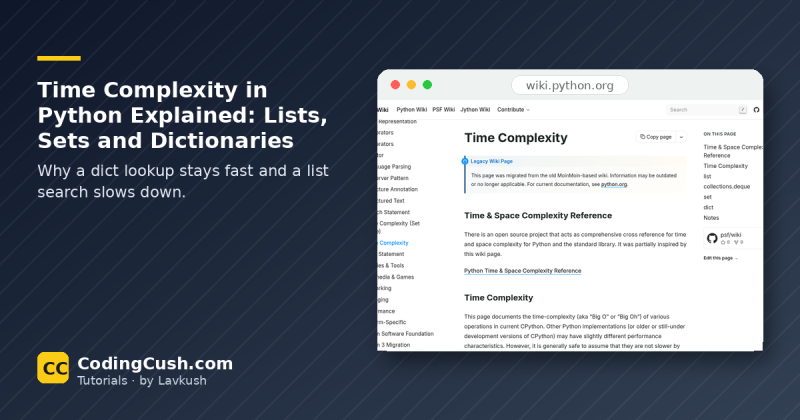
Time Complexity in Python Explained: Lists, Sets and Dictionaries
Time complexity in Python explained simply: why dict and set lookups are O(1), list search is O(n), and how to pick the right container for speed.
Python tutorials in simple English — basics, OOP, file handling, popular libraries and small projects explained step by step for beginners.
Time complexity in Python explained simply: why dict and set lookups are O(1), list search is O(n), and how to pick the right container for speed.
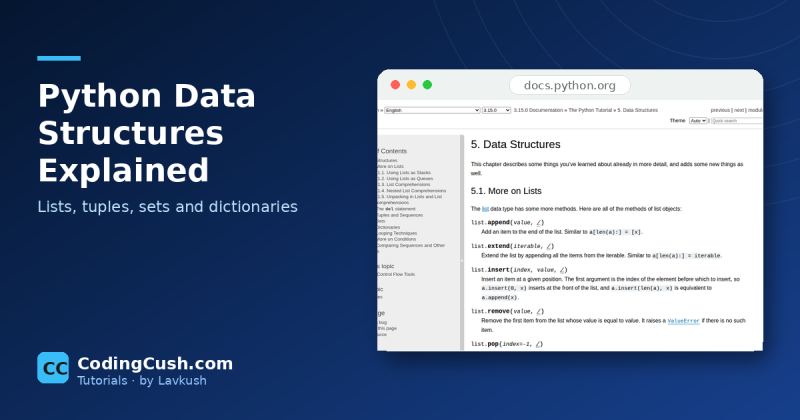
Python data structures explained simply: lists, tuples, sets and dictionaries, how each one works, and a simple rule for choosing the right container.
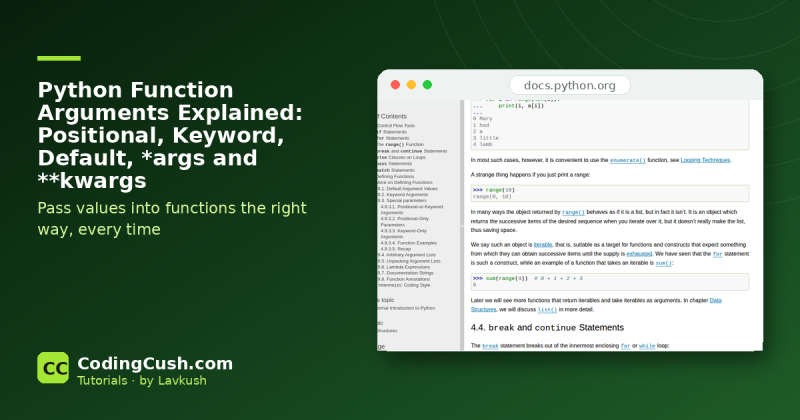
Python function arguments explained in simple English: positional, keyword, default values, *args and **kwargs, with clear code examples for beginners.
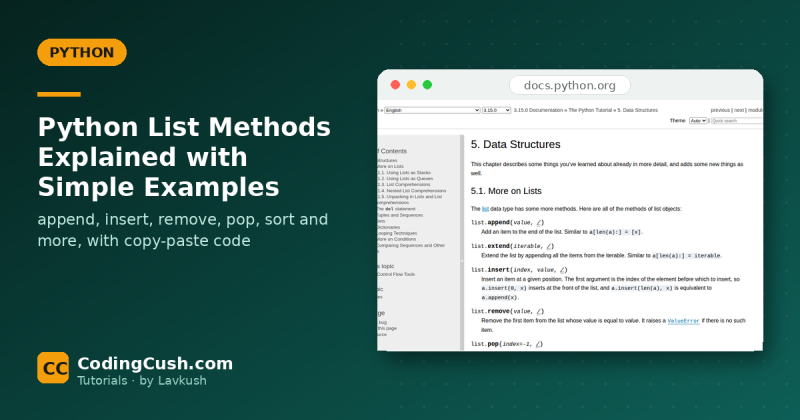
Learn Python list methods with simple examples: append, extend, insert, remove, pop, sort, reverse, copy, index and count, plus a handy comparison table.
Python dictionary methods explained simply: get, keys, values, items, update, pop and setdefault — with small examples you can copy, run and practise today.
Python list comprehension explained with simple examples: build and filter lists in one readable line, transform data, and know when to use a plain loop.
Learn Python error handling with try, except, else and finally. Simple examples for catching errors, cleaning up files and writing code that never crashes.
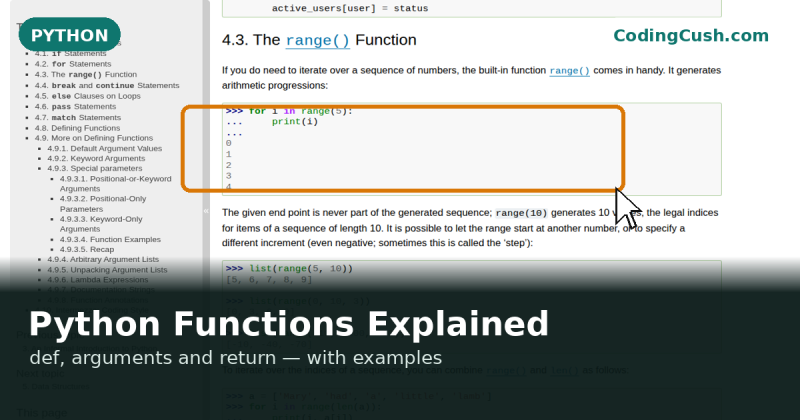
Python functions explained simply: define with def, pass arguments, use defaults and return values, and understand scope — with clear code examples.
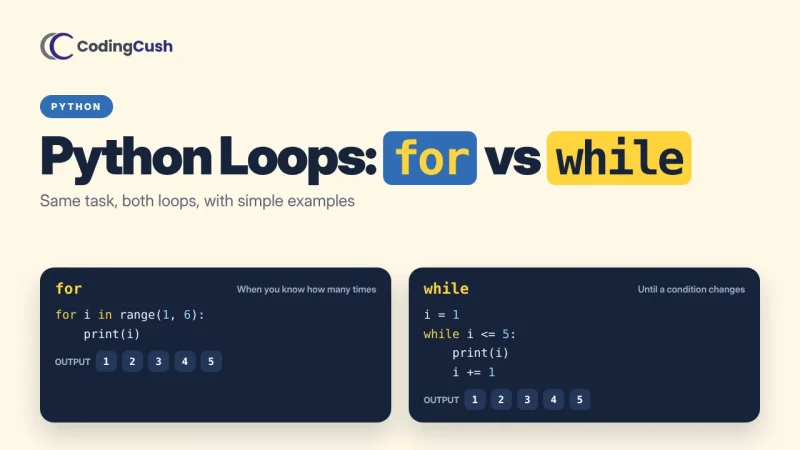
Python loops explained simply: for loop vs while loop with the same task written both ways, range(), break and continue, and the infinite loop mistake.
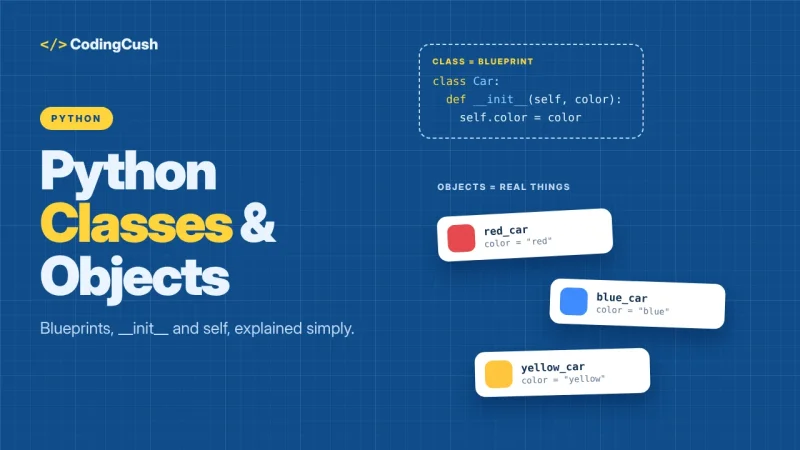
Python classes and objects explained simply: blueprints vs instances, __init__, self, class vs instance attributes, with runnable Student and bank examples.
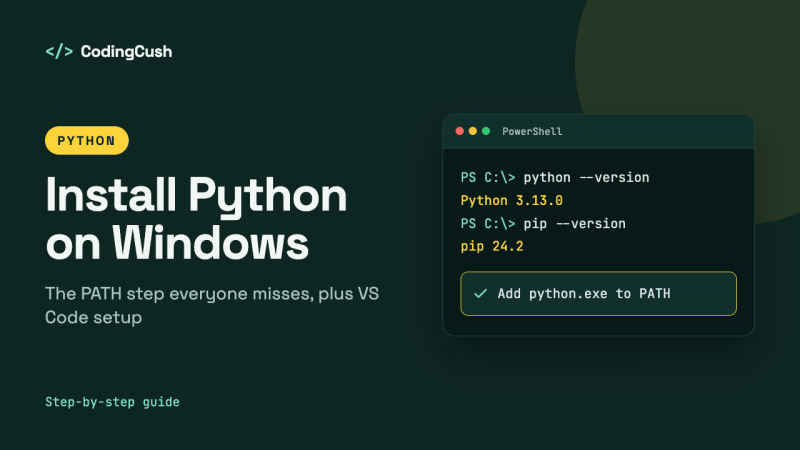
Install Python on Windows step by step: the PATH checkbox everyone misses, checking python --version, setting up VS Code and running your first.py file.
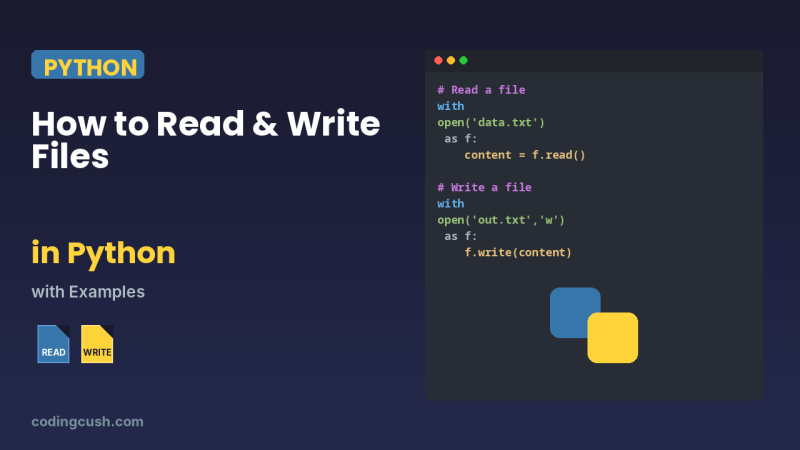
Learn how to read and write files in Python with open(), read(), write() and the with statement. Simple examples for text files, lines, appending and more.
Try a different word, or clear the filter to see everything on this page.


Join 620+ developers learning the simple way. One useful email when new tutorials land — no spam, ever.
You're on the list — the next tutorial will land straight in your inbox.
 Lavkush