

 Lavkush
To sell online as a beginner, you pick one product people already want, choose where to sell it, set up a simple store or listing, add clear photos and an honest price, connect a payment method, and then bring visitors in with helpful content and social posts. You do not need a big budget, a warehouse or a business degree. You need one product, one place to sell it and the patience to improve a little every week. This guide walks through the nine steps in the order that actually works.
Step 1: Pick One Product People Already Want
Most beginners start by asking what they feel like selling. Better sellers start by asking what people are already searching for and buying. Look at the problems around you: phone stands for online classes, organisers for messy desks, simple skincare for busy students. A product that solves a small, annoying problem is far easier to sell than a product that is merely pretty.
Start with one product, not fifty. One product means one page to write, one set of photos and one clear message. You can test it quickly, learn what customers ask, and only then add more items. Our guide on how to start a Shopify store shows the store side of this, while this guide covers the selling steps around it. Think of your first product as your training ground, not your forever business.
Step 2: Check the Numbers Before You Buy Stock
Selling at a loss while smiling is still selling at a loss. Before you commit money, do simple maths on paper: product cost, packaging, delivery charges, platform fees and payment fees. What remains is your profit, and it must be worth your time. If the profit is two rupees per order, you will need a truck, not a shop.
| Cost | Example |
|---|---|
| Product cost | ₹200 |
| Packaging | ₹30 |
| Delivery contribution | ₹50 |
| Platform and payment fees | ₹40 |
| Total cost | ₹320 |
| Selling price | ₹499 |
| Profit per order | ₹179 |
Also check what competitors charge for a similar item. You do not have to be the cheapest, and please do not race to the bottom, but your price must make sense next to theirs. A slightly higher price with better photos, clearer details and faster replies often wins.
Step 3: Choose Where You Will Sell
You have three common choices. Marketplaces like Amazon or eBay bring ready visitors but charge fees and control the relationship with the customer. Social selling through Instagram or WhatsApp costs nothing to start but depends on you replying to every message yourself. Your own online store gives you control, your own domain and customer emails, in exchange for a monthly plan and bringing your own visitors.
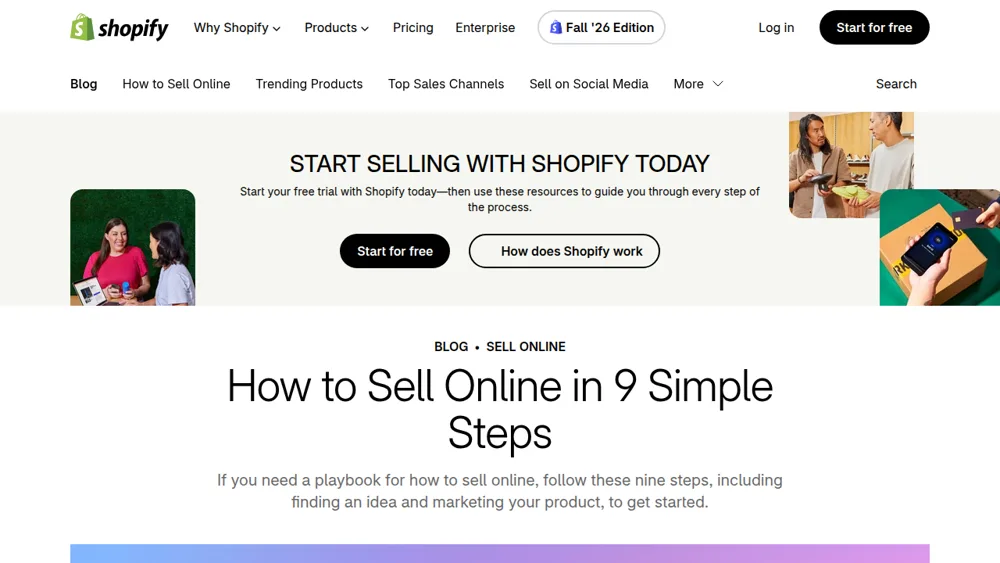
For most beginners who want a real, growing business, an own store on a platform like Shopify is the sweet middle: no coding, payments and shipping tools built in, and room to grow. The Shopify guide on how to sell online walks through the same nine-step journey from the platform side, and it pairs well with the steps here.
Step 4: Set Up Your Store or Listing
Keep the setup boring and clean. Choose a short store name people can spell after hearing it once. Pick a simple theme, add your logo, and write the pages visitors look for before paying: About, Contact, Shipping and Returns. A missing returns page is a silent sales killer, because strangers are trusting you with money before they have met you.
If you are building on Shopify, our walkthrough of Shopify Analytics will help you read your reports later, once orders begin. For now, finish the basics first: store name, theme, essential pages and a test order with your own phone to feel what a customer feels.
Step 5: Write Product Pages That Answer Questions
Your product page must do the job of a good shop assistant. Say what the product is in the first line, who it is for, what it is made of, its size, how to use it and when it will arrive. Add clear photos in good light, including one photo that shows the size honestly next to a common object. Most returns happen because the product in the customer's head was bigger than the product in the box.
Write in the words your customers use, not in factory language. Nobody searches for a "polymer hydration vessel". They search for a water bottle. Short paragraphs, bullet points for features and one clear buy button beat clever poetry every single time.
Step 6: Connect Payments People Trust
People pay online when they feel safe. Offer the payment methods your audience already uses, such as cards, UPI or a known wallet, and show the total price early, including delivery charges. A surprise fee at the final step is the fastest way to lose a sale that was almost yours. Test the full payment flow yourself before announcing your store to anyone.
The Shopify homepage for India lists the payment options available on the platform if you want to compare before choosing. Whatever you pick, make sure refunds are easy to process, because one smooth refund creates more trust than ten advertisements.
Step 7: Decide Delivery and Packaging
Delivery is part of the product experience. Choose a courier that serves your customers' pin codes, pack the product so it survives a bumpy ride, and tell buyers a realistic delivery time. Under-promise and over-deliver is an old rule because it works. Send the tracking link as soon as you have it, and answer the "where is my order" message before the customer has to send it twice.
Start simple: print addresses neatly, photograph each packed parcel if you can, and keep a small notebook of orders until the volume grows. Mistakes at this stage are normal. How you fix them is what customers remember and repeat to friends.
Step 8: Bring Your First Visitors
A beautiful store with no visitors is a library in a desert. Start where your buyers already spend time: short videos showing the product solving its problem, helpful posts in groups (genuinely helpful, not spam), and messages to people who asked about such a product before. Ask your first happy customers for a review and a photo; real proof sells better than any banner you can design.
Give every channel a fair two-week test before judging it. One dull Tuesday proves nothing, in either direction. Keep notes on what brought each order, so next month you spend time on what worked instead of guessing again.
Step 9: Review, Improve, Repeat
Every week, look at three numbers: how many people visited, how many bought, and where the rest left. If many visit and few buy, improve photos, price clarity or trust signals. If few visit, your product is fine and your marketing needs the work. Small weekly fixes compound into a store that looks, one morning, surprisingly professional.
Resist the urge to rebuild everything after one slow week. Change one thing at a time, watch the result, and write down what you learned. That notebook becomes the real asset of your business.
Frequently Asked Questions
How much money do I need to start selling online?
You can start very small: one product, a free trial or low monthly store plan, and packaging you buy in small quantities. Many beginners start with the cost of a few sample pieces and grow from their first sales.
Do I need a registered business to sell online?
Rules differ by country and by platform. Marketplaces and payment providers usually ask for basic identity and tax documents as your sales grow. Check the requirements in your country early so there are no surprises later.
What should I sell if I have no product ideas?
Start with problems you personally understand: items for students, home workers, pet owners or hobbyists you know well. Understanding the buyer is worth more than a clever product you cannot explain.
How long before the first sale?
It varies from days to a few weeks. Beginners who show the product daily, answer questions fast and ask early buyers for reviews usually see the first sale much sooner than those who only wait.
Conclusion
Selling online is a skill, not a lottery ticket. Pick one wanted product, do the maths, set up a clean store, write honest product pages, connect trusted payments, deliver carefully, invite visitors every day and review your numbers weekly. Do those nine steps with patience, and your first sale stops being a question of luck and becomes a question of when.


Leave a Comment