

 Lavkush
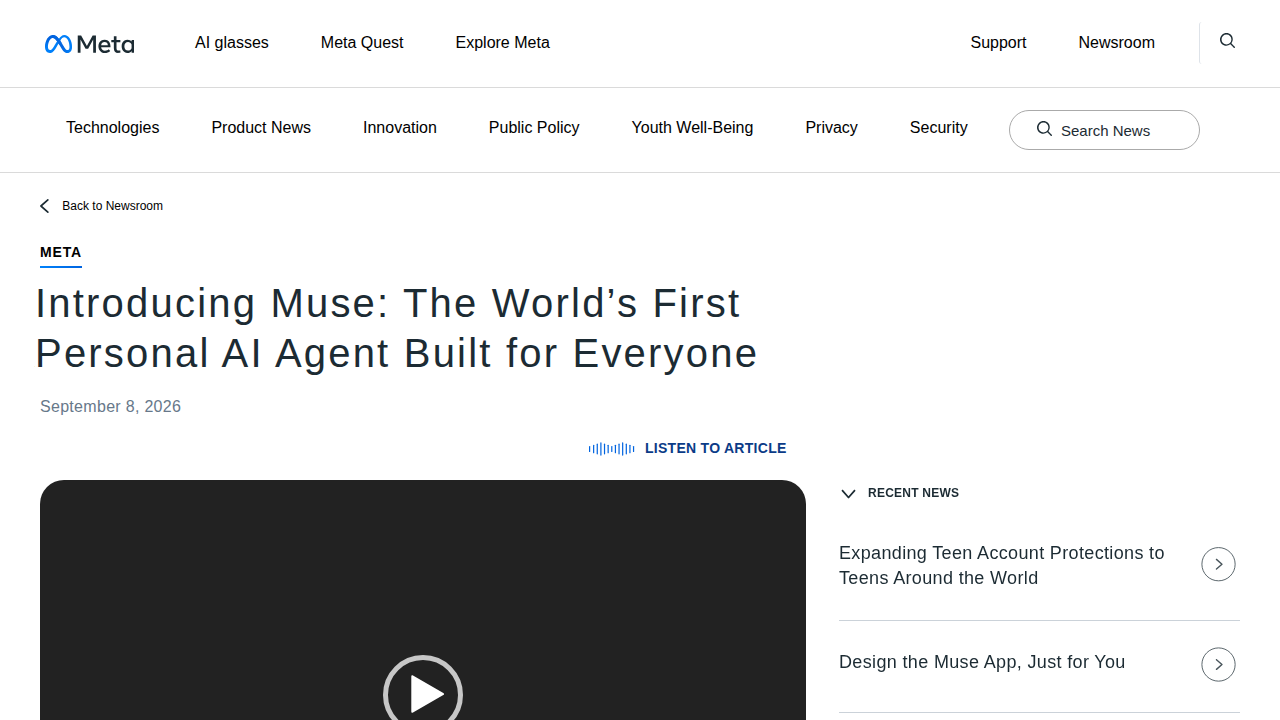
Muse AI is Meta's personal AI agent, introduced on 8 September 2026. A normal chatbot answers your question and then stops. Muse goes further: it acts on your behalf. It can send emails, book travel, fill in forms, shop and even pay for things, and it keeps working in the cloud after you close the app. When it reaches a step that needs your judgement, it comes back and asks for your approval. That difference, answering versus doing, is the whole point of Muse.
First, the Name Confusion: Muse, Muse Spark and Meta AI
Three similar names float around Meta's AI world, and mixing them up causes endless confusion, so let us sort them out in ten seconds. Muse is the agent product described in this post, the one that does tasks for you. Muse Spark is the AI model family underneath it, built by Meta Superintelligence Labs. Meta AI is the assistant you may already know inside WhatsApp and Instagram. Since April 2026, Meta AI also runs on Muse Spark, but Meta AI is a chat assistant, while Muse is an agent with its own computer. Same engine family, different vehicles.
What Muse Can Do for You
The idea is simple: you describe an outcome, and Muse breaks it into steps and works through them. Book a flight that lands before the wedding, and it searches options, compares times and prepares the booking. Ask it to chase an unpaid invoice, and it drafts and sends the email. Tell it to find a birthday gift under a budget, and it shops, compares and can complete the purchase.
Two details make this more than a demo trick. First, Muse keeps working after you close the app, because it runs in the cloud, not on your phone. Second, it returns for approval at the moments that matter, such as before paying or sending something important. You stay the boss. Muse is the very keen assistant who never sleeps and occasionally needs you to sign off on the plan.
A Quick Example: Planning a Trip with Muse
Imagine you type: "Find me a flight to Chicago next Friday that lands before 6 pm, book a window seat, and email the plan to my sister." A chatbot would reply with a list of airlines and good wishes. Muse instead opens its browser inside the Secure VM, searches real flights, filters them by your landing time, holds the best option, and then pauses. Booking spends your money, so that step comes back to you for a tap of approval. After you approve, it pays with a protected virtual card, books the seat, and sends the email with the itinerary attached. You did one sentence of typing. Muse did the eleven fiddly steps in the middle, and it showed its working before the one step that could not be undone.
Chatbot vs Agent: the Difference in One Table
| Point | Normal chatbot | Muse agent |
|---|---|---|
| Main job | Answers questions in a chat | Completes tasks in the real world |
| Tools | Text, sometimes search | Its own browser, email, shopping and payments |
| After you close the app | Stops | Keeps working and reports back |
| Spending money | Cannot pay | Can pay with approval, using protected virtual cards |
If you run a small business or freelance, this shift matters. The boring admin work that eats your week is exactly what agents target. Our guide on how to start freelancing as a beginner covers the human side of getting clients; tools like Muse aim at the paperwork side that follows.
The Model Underneath: Muse Spark
Muse runs on Muse Spark, Meta's most capable model family from Meta Superintelligence Labs. Muse Spark launched on 8 April 2026 and also powers Meta AI. Version 1.3 is the current release. On 15 October 2026, Meta also released open weights for Muse Spark Open, so developers can run a version of the model themselves. For everyday users, the model name matters less than what it enables: careful reasoning, multi-step planning and the ability to use tools without losing the thread of a long task.
Your Own Cloud Computer: the Muse Secure VM
Here is the part that makes Muse different from most rivals. Every user gets a dedicated cloud computer called the Muse Secure VM, with its own browser. Muse does its work inside that machine, not inside your phone or laptop. A separate checker system, called Sentinel, reviews anything that tries to leave the machine and approves it first.
The payment design is equally careful. Muse never sees your real passwords or card numbers. When it buys something, it pays with a single-use virtual card through Stripe Link purchase protection, so the real card stays hidden and each payment is easier to track or dispute. You can read Meta's own description of the launch in the official Muse announcement on Meta's newsroom, and try the product itself at muse.ai.
Muse for Small Business
On 29 September 2026, Meta added Muse for Small Business. It connects Muse to the tools small companies already use, including Canva, Shopify, QuickBooks, Stripe, Notion, Slack and Zoom, plus Facebook and Instagram business accounts. In plain words, the agent can pull context from your shop, your books and your messages, then act across them. If you sell online, this pairs naturally with the skills in our guide on how to sell digital products online as a beginner: you handle the product and the customers, and the agent handles more of the repetitive middle.
Price and Availability
Muse is available in the United States, and in Canada for small business users, on iOS, Android, the muse.ai website and inside WhatsApp. Support for AI glasses has been announced as coming. For most people, Muse is free with usage limits. Meta lists paid plans for heavier use, reported at about $20 per month and about $100 per month for the highest tier. Prices and limits change often in this market, so check muse.ai for the current numbers before you plan around them.
Privacy: Both Sides, Fairly
An agent that reads your email and spends your money deserves privacy questions, and Muse gets plenty. Meta's position: data and conversations inside your VM are not shared with its advertising systems, and you can opt out of your data being used for training. Meta also says a Muse Confidential VM, encrypted with keys only you hold, is planned for later this year. Critics, on the other side, argue that giving one company an agent with this much reach creates surveillance risk, whatever the current policy says. Both points are worth knowing. The sensible approach is to start with low-risk tasks, watch the approval prompts carefully, and widen access only as your trust grows.
Frequently Asked Questions
Is Muse the same as Meta AI?
No. Meta AI is the chat assistant inside WhatsApp and Instagram. Muse is a separate agent product that completes tasks for you. Both run on the Muse Spark model family.
Is Muse AI free?
Yes, for most needs, with usage limits. Paid plans exist for heavier use; check muse.ai for current pricing.
Can Muse really pay for things?
Yes, with your approval. It pays using single-use virtual cards via Stripe Link, and it never sees your real card number.
Where is Muse available?
In the United States, and in Canada for small business, on iOS, Android, muse.ai and WhatsApp. Availability is expanding over time.
What is Muse Spark?
Muse Spark is the model family that powers Muse and Meta AI. It comes from Meta Superintelligence Labs, and version 1.3 is current.
Conclusion
Muse is Meta's bet that the next step after chatbots is agents that finish jobs, not just answer questions. The Secure VM design, the Sentinel checker and protected virtual-card payments show Meta knows trust is the real product here. If you are in a supported country, start it on something small and boring, like travel research or inbox clean-up, and judge it by the approvals it asks for. That behaviour, more than any launch video, tells you whether an agent deserves a bigger role in your day.


Leave a Comment