

 Anand Bajrangi
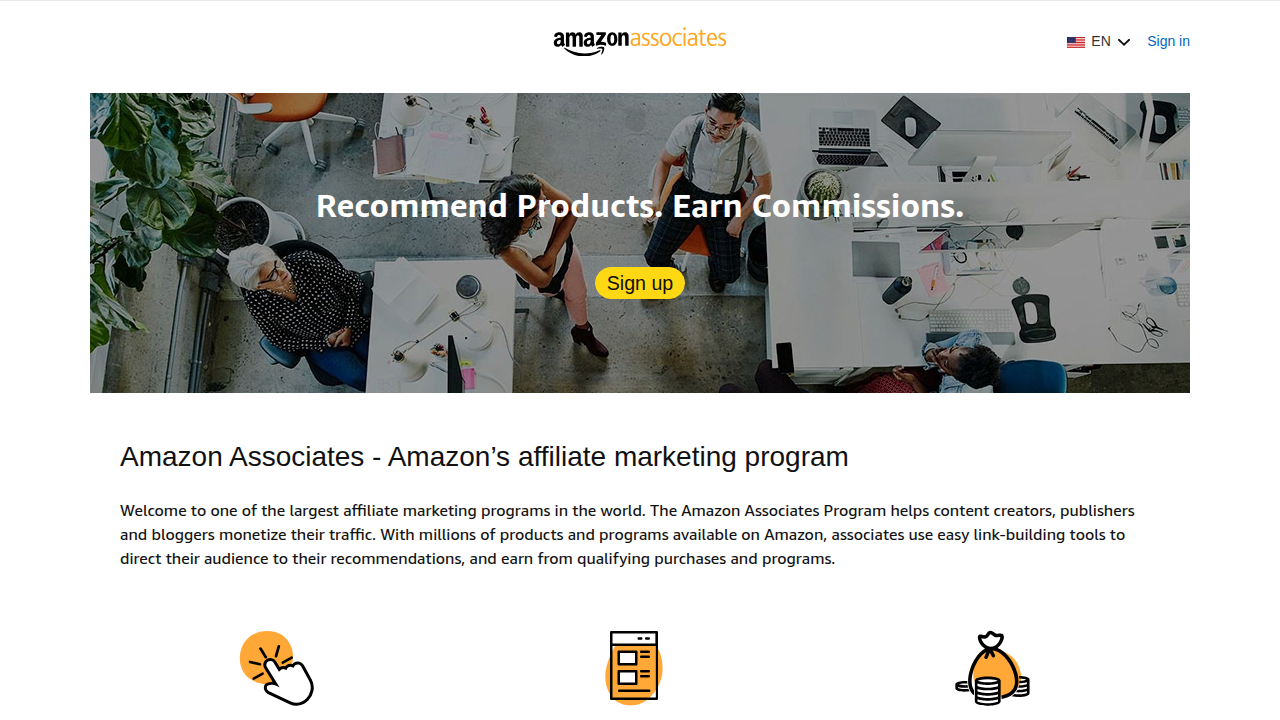
Amazon Associates is Amazon's free affiliate programme. You join, get special links with your tracking ID, and recommend products on your blog, channel or social pages. When someone clicks your link and buys something within the cookie window, Amazon pays you a percentage of that sale. The rate varies by product category, and you must follow Amazon's rules, disclose your links and make qualifying sales in your first 180 days to keep the account open.
What Amazon Associates Actually Is
Affiliate marketing is simple at heart. A company sells products, you recommend them to your audience, and the company pays you a commission when your recommendation leads to a sale. Amazon Associates is the oldest and best known version of this idea. It covers almost everything Amazon sells, from books and headphones to kitchen tools and toys.
The programme suits content creators because the recommendation feels natural. If you write a review, a gift guide or a tutorial, you can link to the exact product you used. Readers get an easy way to buy, and you earn a small reward for the introduction. If this model is new to you, our beginner guide on affiliate marketing and earning your first commission explains the wider picture in plain English.
How Earning Works, Step by Step
The process has five clear steps. First, you apply on the Associates site and describe where you will promote products, such as a blog or a YouTube channel. Joining is free. Amazon reviews applications, and your account starts under evaluation while you make your first sales.
Second, you get your tracking ID and create affiliate links that carry it. That ID is how Amazon knows the sale came from you.
Third, a visitor clicks your link. That click places a cookie in their browser, a small marker saying you sent them. Fourth, if they buy within the cookie window, which is normally 24 hours, the sale is credited to you. You can also earn on other qualifying items they buy in that window, not only the product you linked to. Someone clicks your link for a notebook and buys a lamp as well, and you may earn on both.
Fifth, Amazon calculates your commission. The percentage varies by product category, and Amazon publishes the current rates on its official rate card, which you should check rather than trusting old blog posts. Rates can change, so treat any screenshot from last year as history, not a promise. You can read the full rules on the Amazon Associates Programme Operating Agreement, which is the document you agree to when you join.
| Step | What Happens |
|---|---|
| 1. Join | Apply free and add your website or channel |
| 2. Get links | Create product links with your tracking ID |
| 3. Recommend | Share links inside helpful, honest content |
| 4. Visitor buys | A purchase inside the cookie window counts |
| 5. You earn | A category based percentage is credited to you |
The Important Rules Beginners Must Know
Amazon is strict, and accounts do get closed for breaking the rules. Learn these points before you post your first link, not after a warning email arrives in your inbox at midnight.
First, the 180 day rule. You must make the required number of qualifying sales within your first 180 days, or Amazon can close your account. This is why joining before you have any audience is usually a waste. Build some content and traffic first, then apply when people are actually reading and clicking.
Second, disclosure is compulsory. You must clearly tell your audience that you earn from qualifying purchases. Many creators add a short, honest line near the top of a post or video description. Hiding your links breaks trust and it breaks the rules.
Third, you cannot earn on your own purchases. Do not click your own links to get a discount, and do not ask family to buy through your links as a favour scheme. Amazon tracks this. Fourth, do not put affiliate links where Amazon forbids them, such as in emails or offline material, unless the current agreement allows it. Always check the live agreement, because details do change.
Fifth, prices and rates can change at any time. Never promise readers a fixed price in a way that goes stale, and never present an old commission rate as guaranteed. Finally, do not use Amazon trademarks in ways the programme forbids, and never make links look like official Amazon buttons. The official starting point is the Amazon Associates homepage, where you can read the current terms and join when you are ready.
How and When You Get Paid
Amazon pays monthly, but not instantly. Earnings are paid roughly 60 days after the month in which they were earned, which allows time for returns and cancellations. If a customer returns a product, the commission for that item is removed, which is fair enough, even if it stings a little.
You choose how to receive your money. The common options are direct bank transfer, an Amazon gift card, or a cheque, depending on your country. Bank transfer is the most practical for most creators. Each payment method has a minimum threshold, and you must reach that threshold before Amazon sends anything. Small balances simply roll forward until they are big enough.
Who Amazon Associates Suits Best
Bloggers are the classic fit. Review posts, comparison guides, tutorials and best product lists all give readers a natural reason to click. YouTubers do well too, linking the gear they use in the video description. Social creators can share recommendations where the platform allows affiliate links, as long as every post carries a clear disclosure.
The programme works best when you already recommend products in your content. If you run a cooking blog, kitchen tools are a natural fit. If you teach music, instruments and books fit. Forcing random products into unrelated content rarely works, and readers can smell it instantly. It is a bit like recommending winter coats in the middle of a beach holiday post. Technically possible, deeply unconvincing.
Many creators combine Associates with other income. Our guide on starting a blog and earning money with AdSense shows how display ads can sit alongside affiliate links, so one article can earn in two modest but steady ways.
Common Beginner Mistakes
The biggest mistake is joining too early, with no content and no traffic, then watching the 180 day clock run out. The second is copying product descriptions from Amazon instead of writing your own honest experience. Readers come for your judgement, not for a copy and paste job. The third is linking to everything. A post with forty links looks desperate. A post with three well chosen links looks helpful.
Other common errors include forgetting disclosure, using links on forbidden channels, and expecting the first month to pay the rent. Also avoid building your whole business on Associates alone. Rates change, accounts close, and products go out of stock. A creator with a blog, a channel, ads and two or three affiliate programmes sleeps much better than one who depends on a single dashboard.
Honest Expectations Before You Start
Let us be straight. Percentages are small, so volume matters. You need a fair number of clicks and sales before the earnings feel meaningful. For many beginners, the first payments are modest, enough for a nice coffee and a quiet sense of victory. That is normal. The creators who do well treat Associates as a long game, publish helpful content every week, and let trust do the heavy lifting.
Frequently Asked Questions
Is Amazon Associates free to join?
Yes, joining is free. You apply with your website, channel or app details, and Amazon reviews your account. You must then make qualifying sales within the first 180 days to keep the account open.
How much can beginners earn on Amazon Associates?
It depends on your traffic, your niche and how many readers buy. Percentages are small and vary by category, so most beginners earn modest amounts at first and grow as their content and audience grow.
When does Amazon Associates pay?
Amazon pays roughly 60 days after the end of the month you earned in, once you pass the minimum threshold for your chosen method. You can pick bank transfer, a gift card or a cheque where available.
Can I use my own affiliate links to buy products?
No. You cannot earn commissions on your own purchases, and doing so breaks the programme rules. Always buy normally, and let your commissions come from genuine recommendations to your audience.
Conclusion
Amazon Associates is a fair, simple deal. You recommend products honestly, readers buy through your links, and Amazon shares a small percentage with you. Respect the 180 day rule, disclose every link, check the official rate card, and build real content before you expect real income. Treated as one steady stream among several, it rewards patient creators who genuinely help their readers choose.


Leave a Comment