

 Anand Bajrangi
To start a blog and earn with Google AdSense, you buy a domain, set up WordPress, publish helpful posts on one topic for a few months, and apply for AdSense once you have about 15 to 20 good articles and steady visitors. Google then places ads on your pages and pays you monthly for views and clicks. It is one of the slowest ways to earn online, and one of the most durable, because old posts keep bringing visitors for years. This guide expands the blogging section of our pillar article on 10 ways to earn money online.
How Blogging Income Actually Works
A blog earns in two stages. First comes traffic: people search questions on Google, your posts answer them, and readers arrive. Then comes monetisation: with enough visitors, ad networks like AdSense pay you for showing ads to those readers. Your income is roughly your traffic multiplied by your topic's ad rates. Exam notes, study help, tech tutorials, finance basics and how to guides attract steady search traffic, which is why they work well for Indian bloggers. A blog is also an asset you own, unlike a social media page that an algorithm change can silence overnight.
Step 1: Choose a Topic People Search For
Pick a topic where three things meet: you know something useful, people search for it every month, and you can write 50 posts without running dry. Good beginner topics include exam preparation for one board or exam, simple tech help in Hindi or English, government job updates explained clearly, home recipes for one cuisine, and tutorials for one tool or subject you use daily. Avoid copying big news sites or writing about ten unrelated subjects. A focused blog ranks faster because Google understands what your site is about.
Step 2: Set Up the Blog the Simple Way
Buy a domain name, which costs roughly 800 rupees a year, and connect it to shared hosting. Install WordPress, the free software that powers a large share of the world's blogs; the official WordPress.org site has the software and beginner documentation. Choose a fast, clean theme, add the essential pages (About, Contact, Privacy Policy), and set your site up in Google Search Console so you can watch your search performance from week one. Skip costly themes and twenty plugins. Speed and content earn money; decorations do not.
Step 3: Publish Posts That Answer Real Questions
Traffic comes from answering the exact questions people type into Google. Use the autocomplete suggestions Google shows while typing, and the "People also ask" boxes, as your topic list. Write each post like a helpful senior explaining to a junior: a direct answer near the top, clear headings, short paragraphs, and examples. Two solid posts a week is a strong pace for a beginner with a job or studies. Fifteen to twenty genuinely useful posts is a much better AdSense application than one hundred thin pages stitched together in a hurry.
If your posts are live but visitors are not arriving, work through our diagnosis guide on why a website gets no traffic before writing more. Fixing indexing, intent and quality problems early saves months of publishing into the void.
Step 4: Apply for Google AdSense
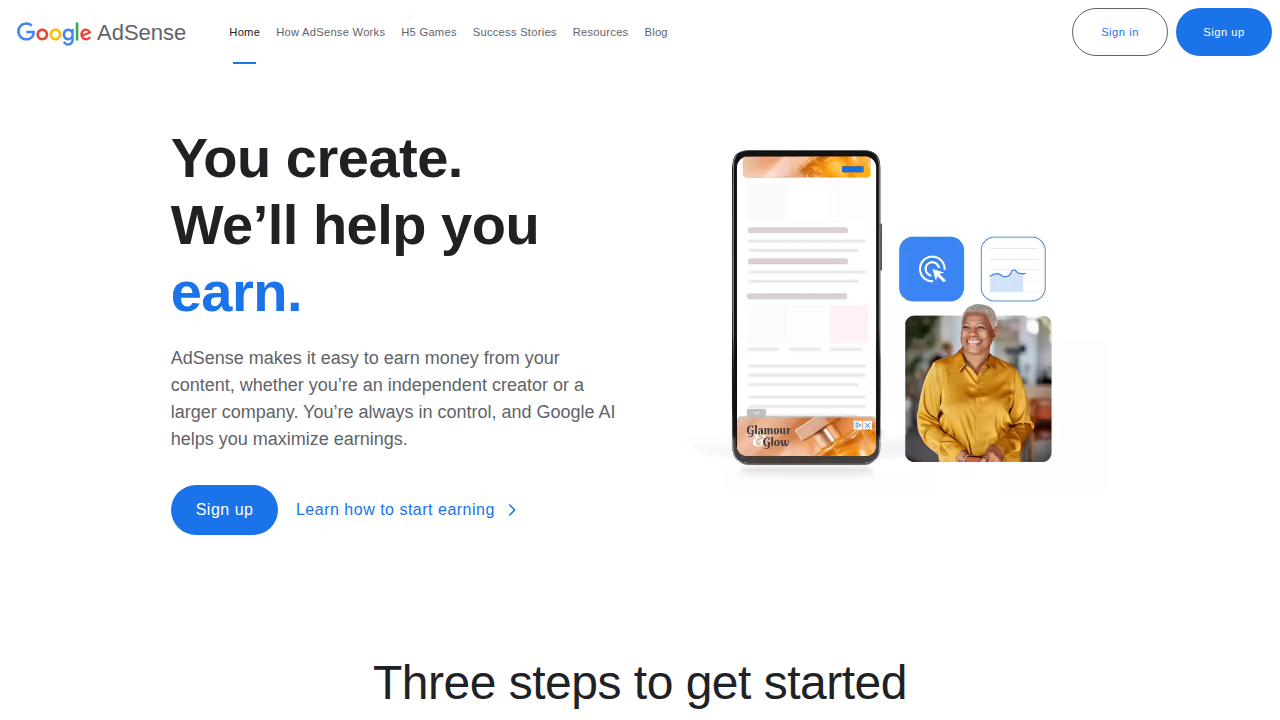
When your blog has original posts, working navigation and the essential pages, apply at the official Google AdSense site. Google reviews your site for content quality and policy compliance, which takes a few days to a few weeks. Rejections are common and not final: the usual causes are thin content, copied text, missing pages or too little traffic. Fix what the rejection mail points at, publish a few more strong posts, and apply again. Once approved, place ads sensibly. Two or three ad units in natural spots earn well without driving readers away; a page stuffed with ads earns angry visitors and, soon, no visitors.
Step 5: Grow Traffic and Income Together
After approval, your only job is more of what worked. Check Search Console monthly to see which posts bring visitors, and write follow up posts on the same themes. Update your best old posts instead of letting them fade. Share new posts with relevant communities without spamming. Most blogs see their first AdSense payment, which needs at least 100 dollars in earnings, somewhere between month 4 and month 9. After that, income usually grows in steps as traffic compounds.
How Much Can a Blog Earn with AdSense?
| Monthly visitors | Rough earning range | What it usually means |
|---|---|---|
| 5,000 | 500 to 1,500 rupees | First payment is still a few months away |
| 20,000 | 3,000 to 10,000 rupees | A focused blog in its first year |
| 100,000 | 15,000 to 50,000 rupees | An established niche blog |
| 500,000 | 75,000 rupees and above | A serious content site, often a small team |
Rates vary a lot by topic and reader country. Finance and software topics pay several times more per visitor than entertainment topics, and readers from the United States or Europe pay more than readers from India. Use the table as a compass, not a promise.
Mistakes That Delay Your First Payment
Three mistakes quietly cost beginners months. The first is copying. Even a few copied paragraphs can get an AdSense application rejected and, worse, can bury your site in search results. Write in your own words, in your own order, with your own examples. Your English does not need to be perfect; it needs to be yours. The second mistake is chasing every topic at once. A blog about cricket, phones, exams and cooking on the same domain confuses Google and readers alike, and usually ranks for none of them. Win one small topic first, then expand from strength.
The third mistake is ignoring search intent. Before writing any post, search your topic on Google and look at what already ranks. If the top results are step by step guides, write a step by step guide, only better and clearer. If they are videos, your article must offer something video cannot, like a checklist or a table readers can save. Ranking is not about writing more words. It is about matching what the searcher actually came for, then serving it faster and cleaner than the pages above you. Bloggers who fix these three mistakes usually see traffic move within eight to twelve weeks, because Google rewards sites that keep proving they exist to help the reader.
Frequently Asked Questions
How many posts do I need before applying for AdSense?
There is no official fixed number. In practice, 15 to 20 original, useful posts with some search traffic gives you a fair chance. Quality and originality matter far more than the raw count.
Can I start a blog for free and still earn?
You can practise on free platforms, but serious AdSense income normally needs your own domain and hosting, which together cost about 2,000 to 3,000 rupees for the first year. Your own site also means you own the asset fully.
How long before a blog earns its first rupee?
Most beginners see small earnings in month 3 to 6 and a first payout between month 4 and month 9. Blogs are a slow start and a strong finish, so judge them after a year of steady posting.
Does AdSense accept blogs in Hindi or regional languages?
Yes, AdSense supports Hindi and many other Indian languages. What matters is original, useful content and policy compliance, not the language itself.
Conclusion
Blogging with AdSense is a patient person's business: one clear topic, a simple WordPress setup, two good posts a week and honest months of waiting for traffic to compound. Start with the posts only you can write, and let the archive you build this year pay you for many years after.




Leave a Comment